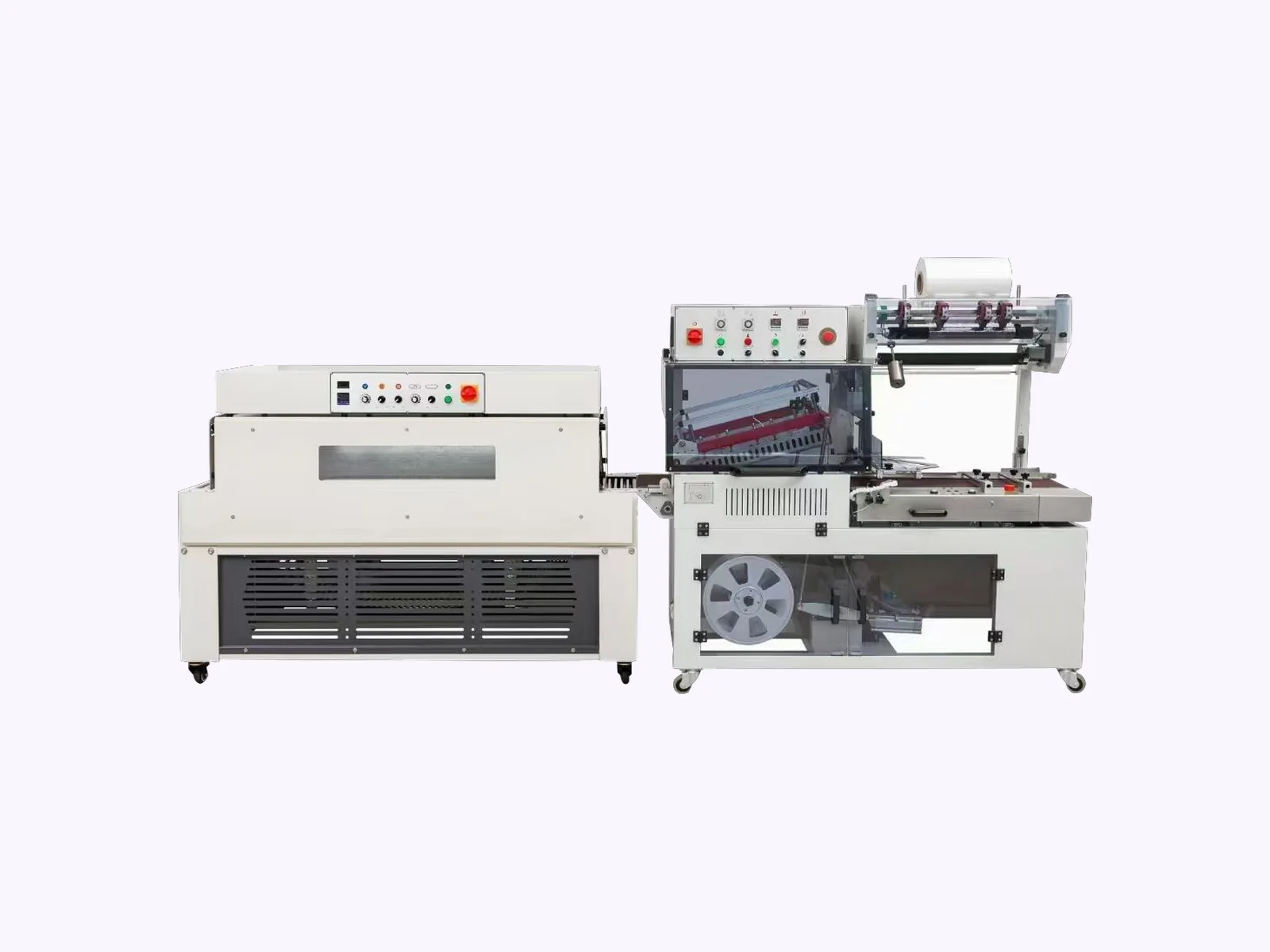
Choosing the right packaging machine starts with what the package must do—not with rated packs per minute. Across industrial unit packaging and sealing, four core machine types cover most factory jobs: shrink wrapping machines for tight film sleeves on boxes and bundles, horizontal flow wrapping machines for high-speed pillow packs around individual items, blister sealing machines for fusing thermoformed blisters to retail display cards, and induction sealing machines for bonding leak-proof foil liners under bottle caps. Start by matching your product form factor and material (shrink film, flow film, PVC blister and card, or foil liner), then screen candidates against four hard gates: product size limits, site power (220 V single-phase vs. 380 V three-phase), heat or electromagnetic sensitivity, and realistic shift output.
The Four Core Types of Packaging and Sealing Machines
A packaging machine wraps or encloses the whole product; a sealing machine closes a specific seam, card, or bottle rim. Understanding what each of the four methods produces prevents buying a machine that solves the wrong problem. (Note: AromaEquip focuses on unit packaging and sealing across these four methods and does not currently list vacuum chamber packers, carton case sealers, or pallet stretch wrappers.)
1. Shrink Wrapping Machines (L-Bar Sealer + Heat Tunnel)
A shrink wrapping machine set uses two stages: an L-bar shrink sealer folds, seals, and cuts centerfolded film into a loose sleeve around the product, and a heat shrink tunnel passes that sleeve through controlled hot air so the film contracts tightly around the contours.
- Best for: Retail cartons, boxed candles, cosmetic gift boxes, and multi-item bundles that need dust protection, tamper visibility, and a tight glossy finish.
- Key specs: L-bar sealer runs on 220 V / 50 Hz at 2.1 kW (1,740 × 1,020 × 1,460 mm); heat shrink tunnel runs on three-phase 380 V / 50 Hz at 15–18.5 kW (2,150 × 710 × 1,420 mm), chamber 1,740 × 500 × 300 mm for packs up to 500 × 300 mm, 2,800 rpm blower, PVC or POF film, rated 30–100 packs/min. Linking the sealer and tunnel by conveyor creates an about 5 m automatic shrink wrapping machine line quoted per project.
2. Horizontal Flow Wrapping Machines
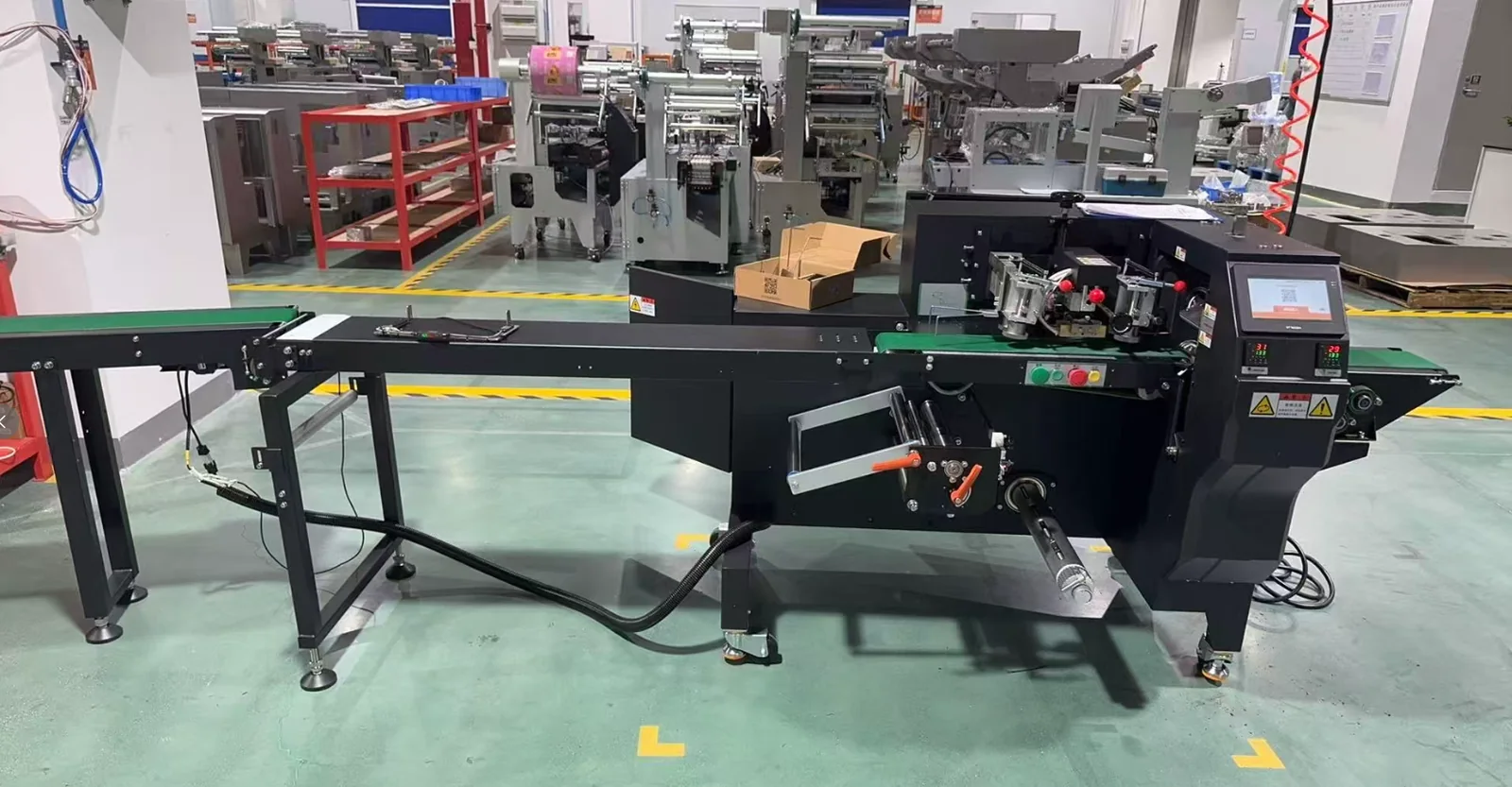
A horizontal flow wrapping machine carries single solid items flat on a conveyor, forms roll film into a continuous tube around each item, seals the bottom longitudinal fin, and uses a rotary knife to cross-seal and cut individual pillow packs.
- Best for: Individual bars, soaps, single candles in sleeves, flat boxes, and hardware items where speed, low film waste, and single-machine simplicity matter.
- Key specs: Single-knife model rated at 30–120 packs/min; bag length 100–500 mm, bag width 35–140 mm, product height 5–60 mm; film width 90–350 mm across eight film types (PP, CPP, PVC, PS, EVA, PET, PVDC+PVC, and OPP/CPP); dual temperature control, adjustable bag former (up to 160 mm), 7-inch touch screen; 220 V / 50 Hz, 2.8 kW; 3,550 × 880 × 1,100 mm; 260 kg net.
3. Blister Sealing Machines (4-Station Rotary)
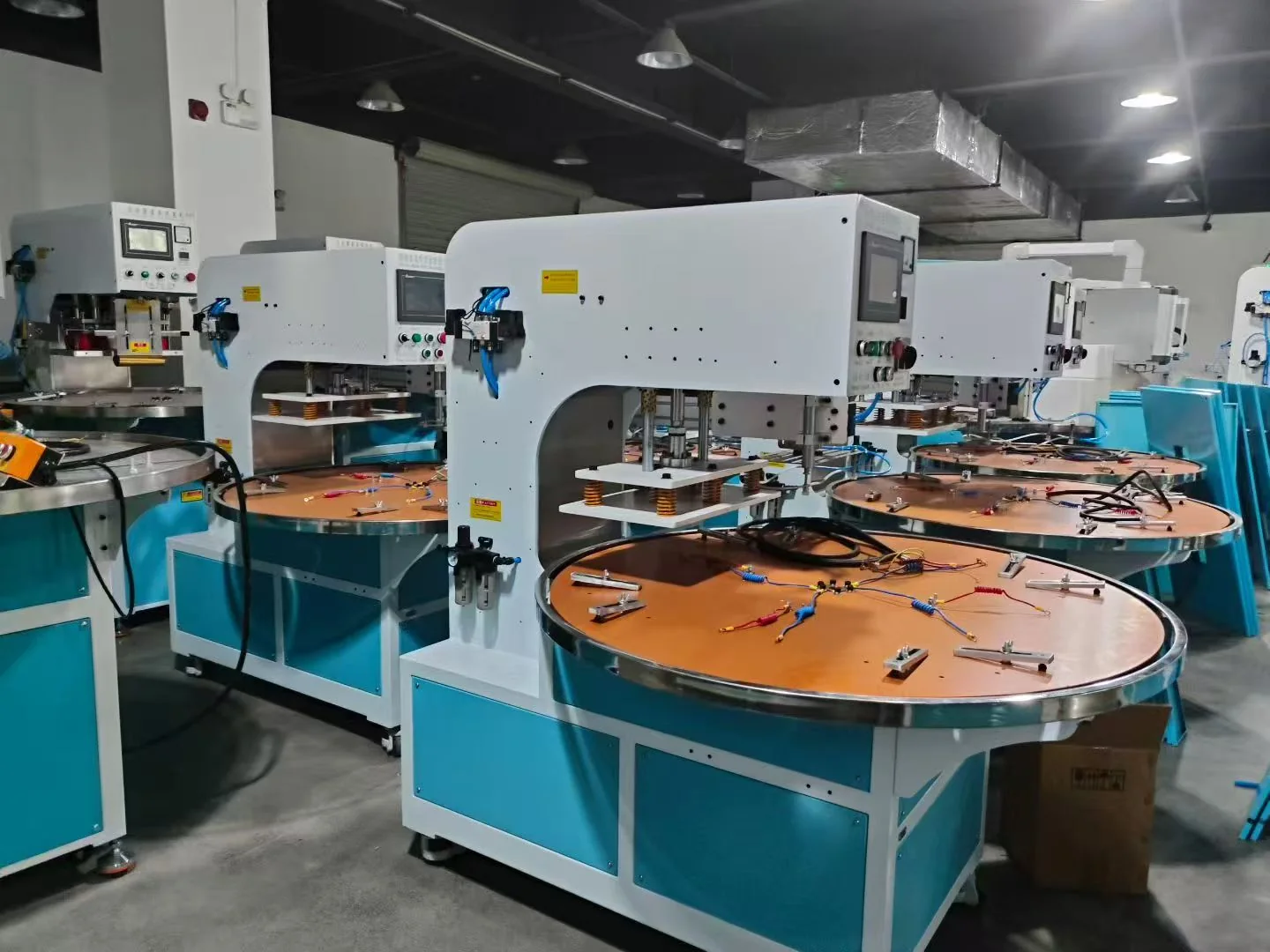
A blister sealing machine fuses a thermoformed PVC blister cavity to a printed backing card on a rotating four-station turntable. Operators load blisters and cards at one station while the press seals at another, keeping the press busy without waiting on hand loading.
- Best for: Small parts, tools, batteries, cosmetics accessories, or retail items that hang on peg hooks and need strong visibility plus tamper resistance.
- Key specs: Four-station rotary turntable (1.2 m wooden table, customizable, 0–50 rpm), 300 × 500 mm press plate, PLC touch screen, 125 × 150 air cylinder (compressed air required), 220 V (50/60 Hz) at 5 kW, weight about 450 kg. Available in heat-press (for heat-seal coated cards and PVC) and high-frequency (for PVC-to-PVC or compatible welds) versions; optional robot-arm pick-and-place feeding.
4. Induction Sealing Machines
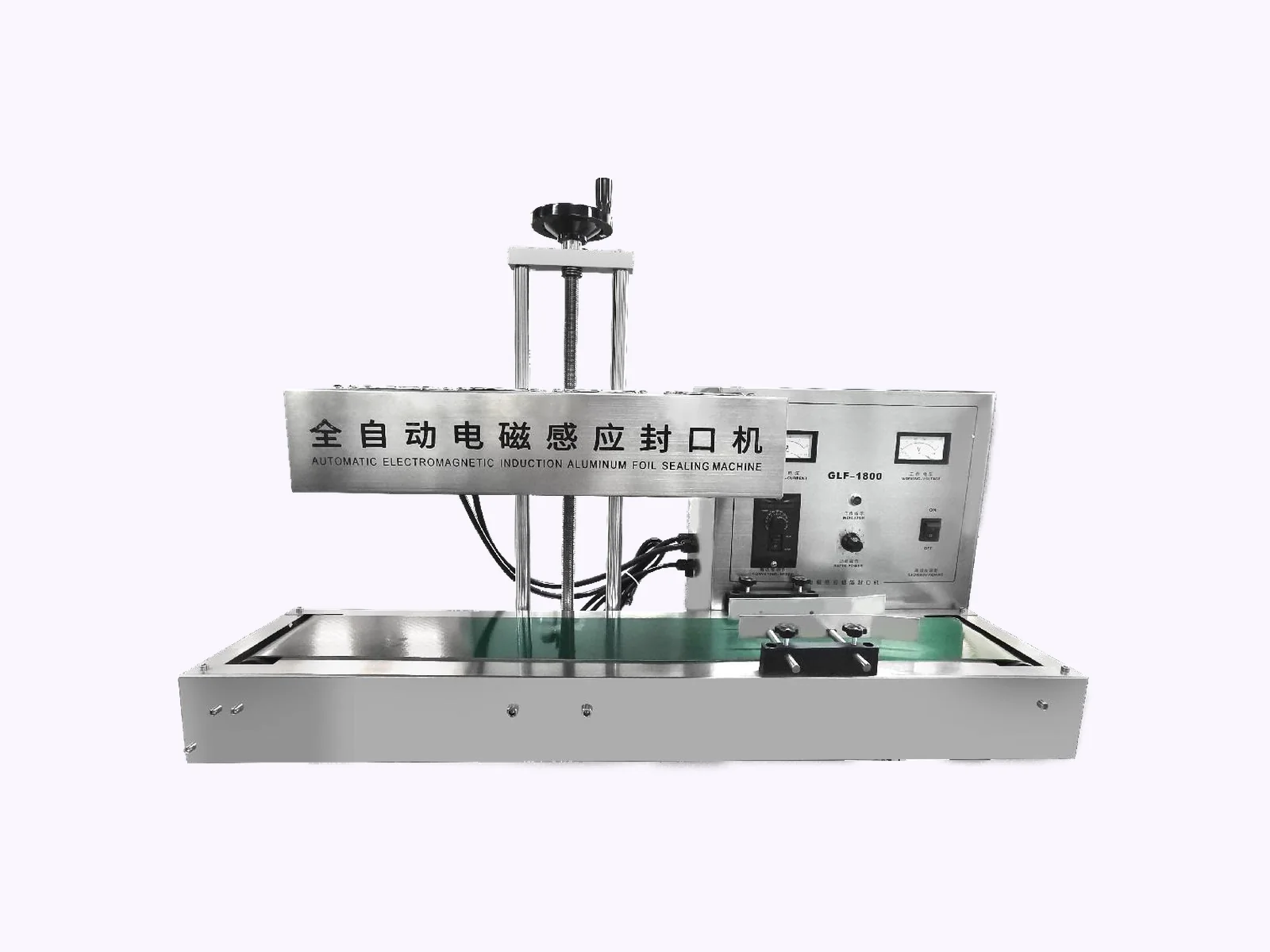
Unlike the three outer-wrapping machines above, an induction sealing machine seals the inner mouth of a capped bottle. After a screw cap containing an aluminum foil liner is tightened onto the bottle, the bottle passes under an electromagnetic sealing head that heats the foil and bonds its heat-seal coating to the bottle rim.
- Best for: Bottled liquids, essential oils, personal care products, chemicals, and foods that require a leak-proof, tamper-evident inner seal beneath a threaded cap.
- Key specs: Air-cooled continuous conveyor model (no water cooling required) with automatic bottle detection; two cap seal diameter ranges (15–60 mm and 50–120 mm); 20–40 bottles/min; 220 V, 1,800 W; 900 × 440 × 500 mm.
Side-by-Side Comparison of the Four Packaging Machine Types
Use this matrix to compare finished pack format, dimensional hard limits, packaging materials, power requirements, and footprint:
| Parameter | Shrink Wrapping Set (L-Bar + Tunnel) | Horizontal Flow Wrapper | Blister Sealer (4-Station Rotary) | Induction Sealer (Conveyor) |
|---|---|---|---|---|
| Finished pack | Tight heat-shrunk film sleeve | Fin-seal pillow pack | PVC blister fused to card | Foil liner bonded under bottle cap |
| Primary products | Boxes, cartons, multi-pack bundles | Single solid items in a row | Small parts, cards, clamshells | Capped bottles and jars |
| Dimensional limit | Pack up to 500 × 300 mm (tunnel) | Product height 5–60 mm; bag L 100–500, W 35–140 mm | Press plate 300 × 500 mm | Cap diameter 15–60 mm or 50–120 mm |
| Packaging material | PVC or POF shrink film | PP, CPP, PVC, PS, EVA, PET, PVDC+PVC, OPP/CPP | PVC blister + coated card | Foil-lined screw cap matched to neck |
| Rated speed | Tunnel rated 30–100 packs/min | 30–120 packs/min | Turntable 0–50 rpm | 20–40 bottles/min |
| Power & air | Sealer 220 V / 2.1 kW; tunnel 380 V / 15–18.5 kW | 220 V / 50 Hz, 2.8 kW | 220 V (50/60 Hz), 5 kW + compressed air | 220 V, 1,800 W (air-cooled) |
| Size & weight | Sealer 1,740 × 1,020 × 1,460 mm; tunnel 2,150 × 710 × 1,420 mm | 3,550 × 880 × 1,100 mm; 260 kg net | 1.2 m turntable; about 450 kg | 900 × 440 × 500 mm |
How to Choose the Right Packaging Machine in Five Steps
Follow these five checks in sequence so you disqualify incompatible options before comparing quotes.
Step 1: Separate Inner Bottle Sealing From Outer Wrapping
Do not confuse an outer shrink wrap with an inner leak barrier. If you bottle liquids or oils and need leak prevention during transit, induction sealing goes immediately after the capper. If you also need a boxed retail finish or multi-pack bundle, shrink wrapping runs downstream as a separate step.
Step 2: Check Dimensional Hard Gates
Measure your smallest and largest products before comparing speeds:
- Taller than 60 mm? That rules out the standard single-knife horizontal flow wrapper (5–60 mm height limit) and points toward shrink wrapping or a custom wrapper.
- Wider than 500 mm or taller than 300 mm? Exceeds the standard heat shrink tunnel opening.
- Blister card larger than 300 × 500 mm? Exceeds the standard rotary press plate.
- Cap outside 15–120 mm? Requires confirmation before quoting an induction sealer.
Step 3: Resolve Shrink Wrap vs. Flow Wrap When Both Fit
For single solid products under 60 mm high (such as boxed candles, soap bars, or flat cartons), both shrink wrapping and horizontal flow wrapping can enclose the item. Decide on three practical trade-offs:
- Choose shrink wrapping if you pack multi-item bundles, want a form-fitting skin-tight finish on square boxes, or run items taller than 60 mm—and your facility has three-phase 380 V power plus extraction for hot air.
- Choose horizontal flow wrapping if you run single items at 30–120 packs/min, only have single-phase 220 V power (2.8 kW vs. 15–18.5 kW for a tunnel), want one machine instead of two, or package heat-sensitive goods (such as soft wax) that should not ride through a hot-air tunnel.
Step 4: Match Packaging Materials, Liners, and Mold Costs
AromaEquip builds packaging and sealing machines only—not films, blister cards, or foil liners. Verify consumable compatibility early:
- Shrink film: PVC and POF shrink at different temperatures; choose your film before setting tunnel specs.
- Blister cards: Heat-press sealing requires a heat-seal coated card, while high-frequency sealing welds PVC; every new blister shape requires its own four-station mold set.
- Induction liners: Without a foil liner inside the cap, an induction sealer does nothing, and the liner’s heat-seal coating must bond to your specific bottle neck plastic or glass.
Step 5: Verify Site Power, Floor Space, and Material Safety
Check utilities and safety before ordering:
- Three-phase power: Most machines in this range run on 220 V, but the heat shrink tunnel requires 380 V three-phase at 15–18.5 kW—confirm your local voltage and frequency (50 Hz vs. 60 Hz), breaker, cable, and ventilation first.
- Door and forklift access: The flow wrapper ships in two crates (about 350 kg gross) and the blister sealer ships in a 2,400 × 1,745 × 1,975 mm crate (about 450 kg).
- Induction safety checks: Metal caps heat up in an electromagnetic field and must be flagged before quoting. If you induction-seal bottles containing alcohol or flammable solvents, confirm your material, cap, and site safety requirements before running production.
How to Estimate Accepted Packs per Shift
Rated machine speed reflects continuous running on an ideal pack length—not accepted finished packs across an 8-hour shift. Film roll changes, bag-former or mold resets, manual infeed pacing, and rejected seals all reduce real output.
Worked Example Using Assumed Inputs (Horizontal Flow Wrapper)
All figures below are illustrative assumptions to show the sizing method, not a quoted output guarantee:
- Scheduled shift: 480 minutes (8 hours)
- Deducted non-running time: 30 minutes scheduled breaks + 20 minutes film-roll changes and threading + 25 minutes bag-former and temperature changeovers + 15 minutes waiting on upstream product supply = 90 minutes
- Net running time: 480 - 90 = 390 minutes
- Assumed steady running pace (medium pillow pack): 55 packs/min
- Assumed inspected pass rate (clean end/fin seals and cut position): 97%
Estimated accepted output: 390 min × 55 packs/min × 0.97 = 20,806 accepted packs/shift (rounded down to whole packs)
What reverses this calculation: Longer bags slow the rotary knife cycle; hand-feeding individual items onto the infeed belt often caps real speed below 55 packs/min; and switching film types requires temperature stabilization time. On shrink lines, hand-feeding the L-bar sealer—not the tunnel’s 30–100 packs/min rating—usually sets the real pace.
Sample-Run Acceptance Checklist and RFQ Package
Most of our core machines are made in our own factory. Write your sample pack, material spec, pass criteria, and handover documents into your quotation before confirming an order.
Sample-Run Acceptance Table
| Check Item | Target / Tolerance | Verification Method | Evidence to Record | Disposition |
|---|---|---|---|---|
| Seal integrity | Closed, straight seals with agreed pull strength (or continuous foil ring for induction) | Pull-test 20–50 packs (or peel 20 induction liners) | Pull/peel test log and photos | Pending / Pass / Retest |
| Finish & heat check | Tight shrink without loose corners; zero burn holes, scorched cards, warped blisters, or melted caps | Visual inspection across 50 finished packs | Defect count and close-up photos | Pending / Pass / Retest |
| Leak & protection check | Zero liquid leaks on inverted squeeze test (induction) or clean fin/end cut (flow wrap) | Invert and squeeze 20 sealed bottles, or inspect 50 flow-wrap cuts | Inspection log | Pending / Pass / Retest |
| Dimensional & mold fit | Clean passage through tunnel/former/mold without jams or product deformation | Run smallest and largest sample SKUs | Run video and stop count | Pending / Pass / Retest |
| Continuous run & changeover | Agreed stop limit over 15–30 min run; timed film or mold changeover | Run continuous batch at target pace and time one switch | Run and changeover time sheet | Pending / Pass / Retest |
| Handover documentation | Manual, wiring diagram, mold/spare-parts list matching quoted config | Verify document set against machine before dispatch | Signed handover checklist | Pending / Pass / Retest |
Six Inputs to Prepare for Your RFQ
- Product sample and dimensions: Length, width, height, weight, and whether contents are heat-sensitive or flammable.
- Packaging goal: Tight outer sleeve/bundle, individual pillow pack, blister card display, or inner bottle-mouth seal.
- Packaging material sample: Exact film type and thickness (PVC, POF, PP/CPP, etc.), PVC blister + coated card, or screw cap with foil liner.
- Target output: Packs or bottles per minute (or accepted packs per shift) and SKU count per week.
- Upstream/downstream flow: Standalone bench/floor station or linked to a capper, labeler, or conveyor (including conveyor height).
- Site utilities and access: Available voltage (220 V single-phase vs. 380 V three-phase), compressed air availability, floor space, ventilation, and doorway/forklift access.
Frequently Asked Questions
What is the difference between a packaging machine and a sealing machine?
A sealing machine closes one specific interface—such as a film seam on an L-bar sealer, a blister-to-card weld, or a foil liner under a bottle cap. A packaging machine wraps or encloses the entire product, such as a horizontal flow wrapper or a complete shrink-wrapping set.
Which packaging machine is best for boxed candles or single candles?
Boxed candles and multi-candle gift bundles usually fit a shrink wrapping set (L-bar sealer plus heat tunnel) for a tight retail sleeve, though heat-sensitive wax should be tested at controlled tunnel speeds. Single candles or bars up to 60 mm high that need an individual pillow pack without a hot-air tunnel fit a horizontal flow wrapper.
Does an induction sealing machine work without a foil liner inside the cap?
No. Induction sealing heats an aluminum foil layer inside the cap to bond its coating to the bottle rim. Without a compatible foil liner—and a tightly screwed-on cap—induction sealing does nothing.
Do I need three-phase power for packaging machines?
Only for the heat shrink tunnel, which is rated at 380 V / 50 Hz (15–18.5 kW). Our L-bar shrink sealer (2.1 kW), horizontal flow wrapper (2.8 kW), four-station blister sealer (5 kW), and air-cooled induction sealer (1.8 kW) all run on 220 V.
Do you supply vacuum packers, carton sealers, or pallet stretch wrappers?
No. Our current packaging and sealing range covers shrink wrapping, horizontal flow wrapping, blister sealing, and induction sealing for unit packs, boxes, cards, and bottles. We also build machines only and do not supply film, cards, or foil liners.
How should I send pack samples, film specs, and floor plans for a quote?
Start by sharing your product dimensions, packaging method, material, and hourly target through the AromaEquip enquiry form. Because the website form collects text project details rather than file uploads, send pack photos, drawings, film specs, or floor layouts via the email or WhatsApp contact listed on that page.
Next Step
Compare models across our packaging machines and full packaging and sealing equipment pages to confirm which method fits your product. When you are ready to check dimensional limits, power setup, and a sample-run test with your own film or liners, send your product dimensions, packaging material, and target rate via the AromaEquip enquiry form.